A course contains different kinds of work: understanding something, completing an assignment, and meeting a fixed date. Use a page that makes the relevant distinction visible instead of putting the entire course on every sheet.
Choose the view you are missing
- Four-week study notebook: four undated A4 portrait weeks with learning goals, assignments and mirrored binding. Start here for a short revision cycle.
- Study focus day: one A4 daily focus page for a specific piece of reading, practice or writing. Use it when the next action needs more room.
- Assessment month: a landscape month grid for submission dates and preparation checkpoints. It opens undated; dated mode supplies the month numbers.
- Study year overview: twelve miniature months on one landscape A4 sheet. Mark broad assessment periods or course boundaries after checking the official course calendar.
Example: a report due in three weeks
Put the submission date on the month page, then choose earlier dates for a complete draft and a source check. On this week's page, choose “compare two sources” as an action and “explain where the sources disagree” as a learning goal. A daily focus sheet can hold the comparison notes and the first paragraph.
The goal describes what you are trying to understand; the assignment describes what must be handed in. Finishing one does not automatically prove the other. The study presets change the printed section labels to help keep that distinction visible; they do not provide course content or assess your understanding.
Start with one sheet, then expand
- Open the template that matches the immediate question. Check A4 against the paper you actually have and switch to Letter if needed.
- Choose dated pages if the deadline calendar matters, or write dates carefully on the undated preset.
- Fill the fixed class and submission dates from current course instructions. Add travel and other commitments when deciding what fits.
- Write one next action. If it is still “revise everything,” make it smaller before adding more lines.
- After using the page, keep only the sections that helped. Turn off unused areas or change orientation before printing the rest.
A realistic boundary for the set
There are no built-in course timetables, spaced-repetition calculations, school holidays or automatic reminders. The yearly page is January through December, so an academic year spanning New Year needs two annual pages. A monthly grid holds short signposts; detailed reading notes belong on a larger writing page.
If your day is mostly fixed classes, try the timeline preset and change its purpose to study. Its hourly range is fixed, so check the preview before deciding it fits.
Read the method beside the page
Use the four-week study guide for a learning cycle, daily planning for selecting a result, and monthly planning for deadlines. The workflow guide shows how these views connect without duplicating the entire plan. If you bind the weekly set, test both sides with the binding guide before punching.
Choose a page to make your own
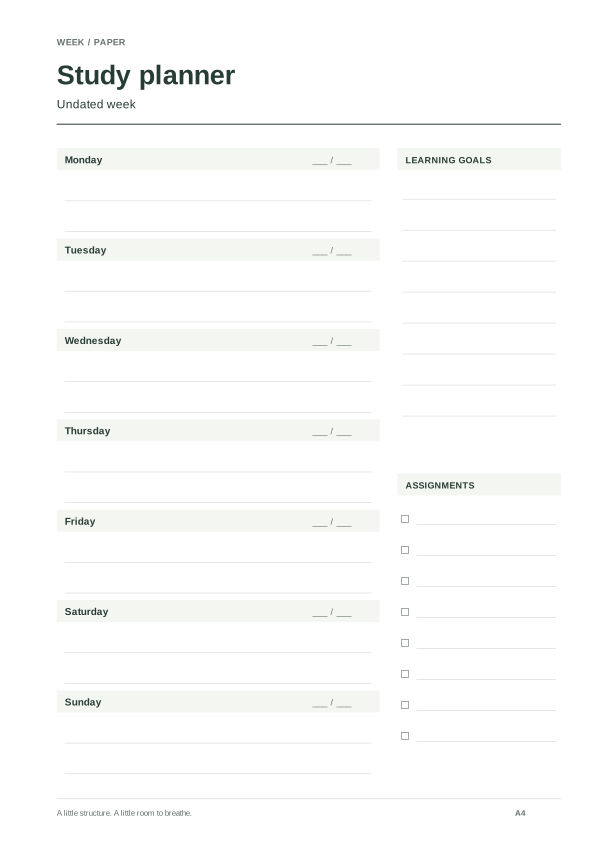
Four-week study notebook
Four undated A4 weeks with learning goals, assignments and alternating binding space.
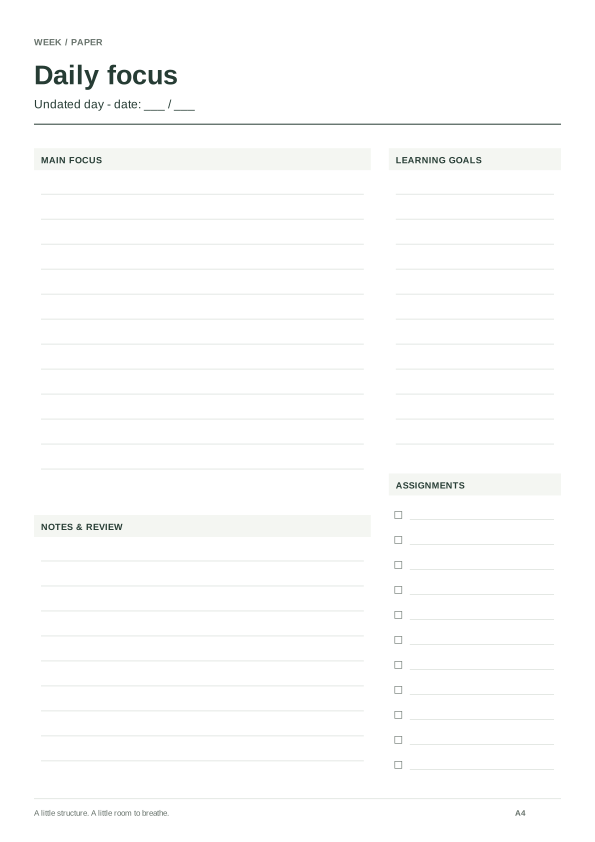
Study focus day
One undated A4 focus page with study goals and assignments for a single working day.
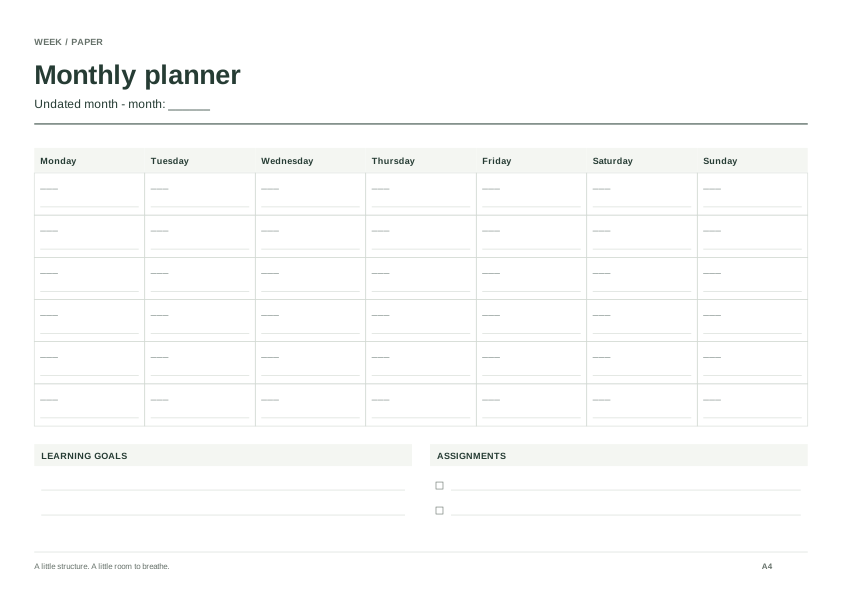
Assessment month
An A4 month grid with study sections for deadlines and the preparation that comes before them.
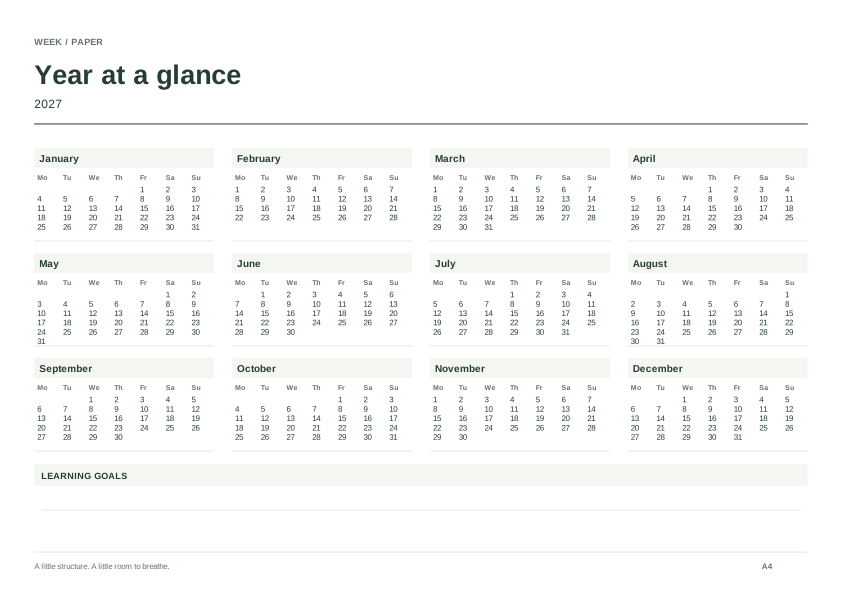
Study year overview
Twelve miniature months on landscape A4, with study goals for a broad calendar-year view.